
| Maintenance Tips | Protec Pacific Team
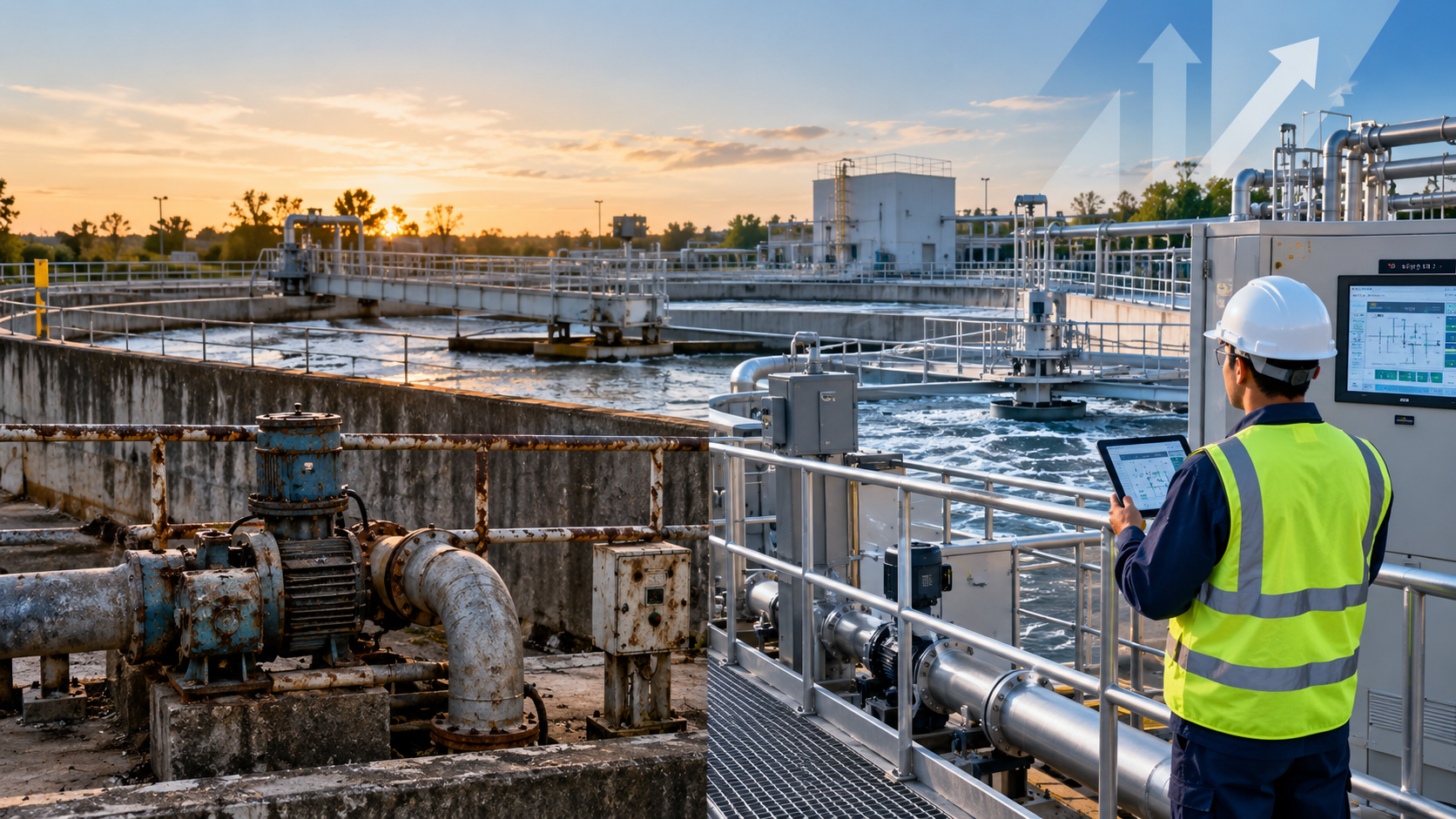
Wastewater treatment systems rarely lose performance overnight. More often, capacity limitations, equipment deterioration, changes in influent characteristics, and operating constraints develop gradually. Identifying the early signs allows a facility to investigate the cause before performance, reliability, or compliance is affected. The following five indicators are strong reasons to carry out a structured treatment-plant assessment.
1. Chemical demand is steadily increasing
If operators need progressively higher coagulant, flocculant, pH-adjustment chemical, or disinfectant doses to maintain the same treatment performance, the reason should be investigated. Increasing chemical demand may result from changing influent characteristics, higher process loading, reduced mixing or dosing efficiency, equipment deterioration, process instability, or operation outside the original design conditions.
The correct response is not simply to continue increasing the dose. Trend data, laboratory results, and process operating conditions should be reviewed to identify the underlying cause.
2. Effluent quality is moving closer to the compliance limit
A reduction in the operating margin between normal effluent quality and the applicable discharge or reuse limit is an important early warning. The cause may include higher influent loading, fouling, loss of biological performance, reduced clarification or filtration efficiency, instrumentation issues, equipment deterioration, or changes in wastewater characteristics.
Even when the plant remains technically compliant, a shrinking safety margin means there is less resilience during peak loads, equipment outages, or unexpected influent events.
3. Sludge volumes are increasing or dewatering performance is declining
Increasing sludge production, rising disposal frequency, or declining cake solids can indicate changes in influent loading, increased chemical sludge production, poor thickening or dewatering performance, or reduced effectiveness of upstream treatment processes.
Tracking sludge volume, dry solids production, polymer consumption, and cake solids concentration can provide valuable information about the condition of the overall treatment process.
4. The facility has outgrown the original design basis
Facilities often expand production, increase occupancy, add operating shifts, or introduce new processes without reassessing the wastewater treatment plant. As a result, a system may approach its hydraulic, organic, nutrient, or solids-loading capacity even when the physical flow alone does not appear excessive.
Operating consistently close to the original design limits leaves less capacity to absorb peak flows, shock loads, equipment downtime, or future expansion.
5. Maintenance has shifted from preventive to reactive
A growing shift from planned maintenance to breakdown response can indicate deteriorating equipment condition, inadequate redundancy, obsolescence, insufficient maintenance resources, or operation near the system's design limits.
Repeated short-term repairs should trigger a structured condition and performance assessment covering critical pumps, blowers, mixers, screens, dosing systems, instrumentation, control equipment and sludge-handling systems.
An upgrade does not always mean replacing the complete plant
A wastewater treatment upgrade can range from targeted process optimization to major capacity expansion. In many facilities, improvements to pretreatment, equalization, aeration, clarification, filtration, sludge handling, instrumentation, automation, or control philosophy can restore performance and extend asset life without replacing the entire treatment system.
A sound upgrade study should begin with actual operating data, influent and effluent trends, equipment condition, energy and chemical consumption, sludge production, and the current hydraulic and pollutant loading compared with the original design basis.
Structured Facility Assessments
Protec Pacific supports wastewater treatment plant assessment, process optimization, rehabilitation and upgrade projects for municipal and industrial facilities, with solutions developed around actual operating conditions and future capacity requirements.