
| Industry Insights | Protec Pacific Team
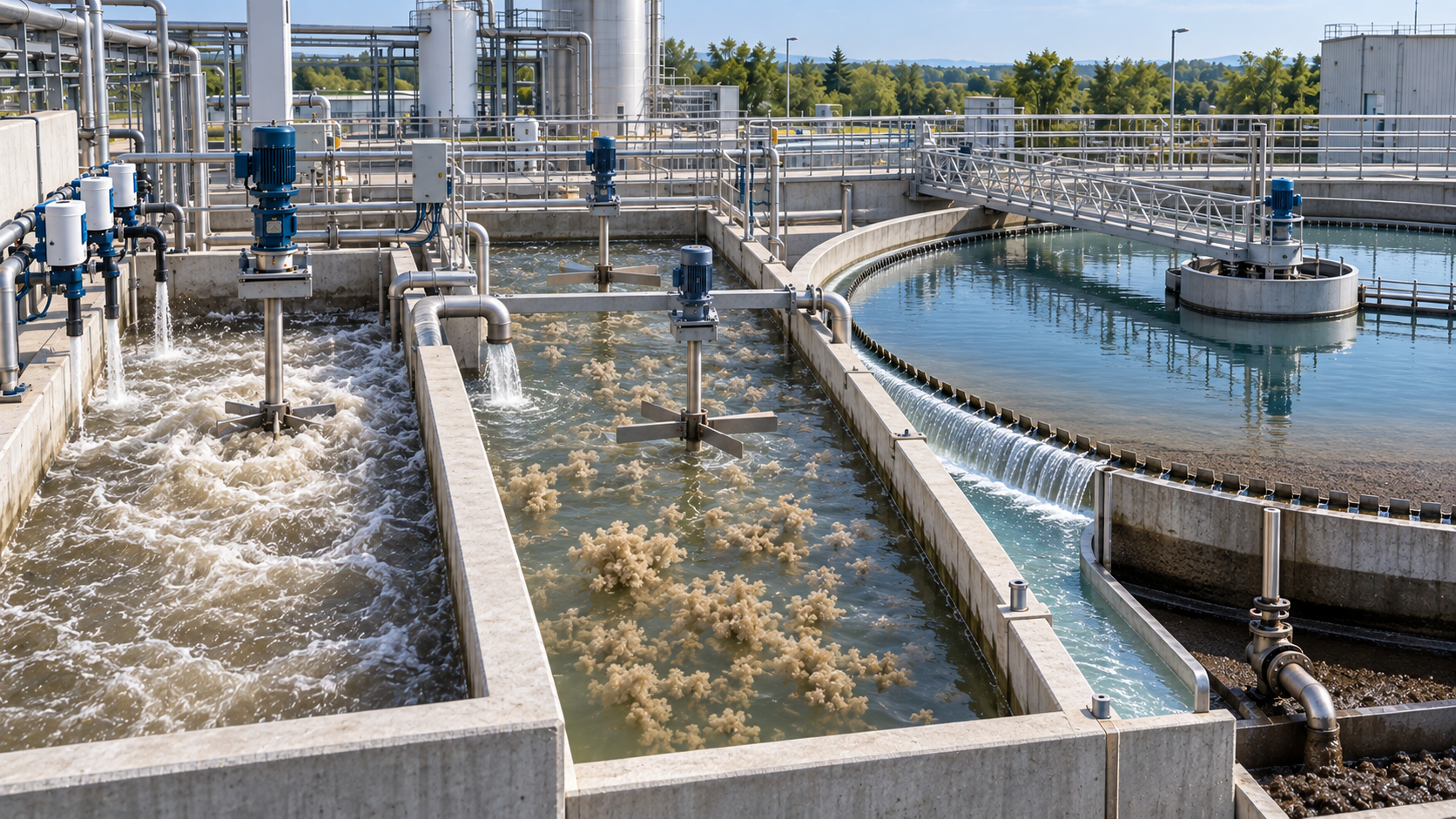
Solid-liquid separation is a fundamental part of many industrial wastewater treatment trains. Its performance determines how much suspended matter, oil, biological solids, or chemically precipitated material is carried into downstream processes. When separation is properly selected and integrated, it can improve process stability, protect equipment, reduce downstream solids loading and, in suitable applications, reduce chemical or energy requirements.
Choosing the right separation method
There is no single best solid-liquid separation technology for every wastewater stream. Gravity sedimentation, dissolved air flotation (DAF), filtration, centrifugation, belt presses, filter presses, and other mechanical separation technologies each have specific areas of application.
Selection depends on particle size and density, solids concentration, settleability, oil and grease content, hydraulic and solids loading, temperature, flow variability, required treated-water quality, available footprint, and the way separated solids will be thickened, dewatered, transported, or disposed of.
Chemical conditioning can be as important as the separator itself
Fine suspended and colloidal particles may not separate effectively without upstream conditioning. Coagulation and flocculation can improve particle aggregation and separation, but the required chemistry is wastewater-specific. Jar testing, representative sampling and operating data are therefore important when determining chemical type, dose, mixing conditions and expected solids production.
Dewatering has a direct effect on operating cost
Sludge handling, transportation and disposal can represent a high operating cost for industrial and municipal treatment facilities. Mechanical dewatering using centrifuges, belt filter presses, screw presses, filter presses or other suitable equipment can increase cake solids concentration and reduce the volume requiring transport or final disposal.
The economic benefit should be evaluated against sludge characteristics, target cake dryness, polymer demand, energy consumption, operator requirements, maintenance needs and the selected disposal route. The best dewatering solution is therefore the one that provides the required performance over the complete operating cycle, not simply the highest nominal throughput.
It is a process decision, not just an equipment purchase
Solid-liquid separation performs best when it is engineered as part of the complete treatment train. Upstream conditioning, equalization, chemical dosing, hydraulic loading, solids concentration, downstream sludge handling, and final effluent requirements all influence technology selection and equipment sizing.
For industrial wastewater in particular, representative characterization of the actual waste stream is essential because variability in solids, oils, chemicals and production cycles can materially change separation performance.
Engineered Solutions
Protec Pacific designs and integrates solid-liquid separation systems as part of complete industrial and municipal treatment solutions, matching the selected technology to actual wastewater characteristics, process objectives and site constraints.